Author: Jennifer Liston

  • A poem finds a home in Transnational Literature

    I’m pleased that my poem ‘Shards of Colour’ has found a published home in the latest edition of Transnational Literature.

    There’s plenty of great reading in this issue and includes poems from my talented fellow poets and friends Mike Hopkins and Ian Gibbins, as well as book reviews by Mandy Treagus, Jennifer Osborn and Gay Lynch.

    Many thanks to Heather Taylor Johnson, the journal’s Poetry Editor.

  • When Kim Kardashian walked into a pole while tweeting; or, how my poem about disconnection connected me with talented Irish teens

    A few months ago I met Aisling, a lovely English and Geography teacher from St Mary’s Secondary School in Mallow (Co Cork, Ireland). We chatted about literature and writing in general, and poetry in particular. Aisling asked if she could introduce my poetry to her fifth year English class. Of course I said yes.

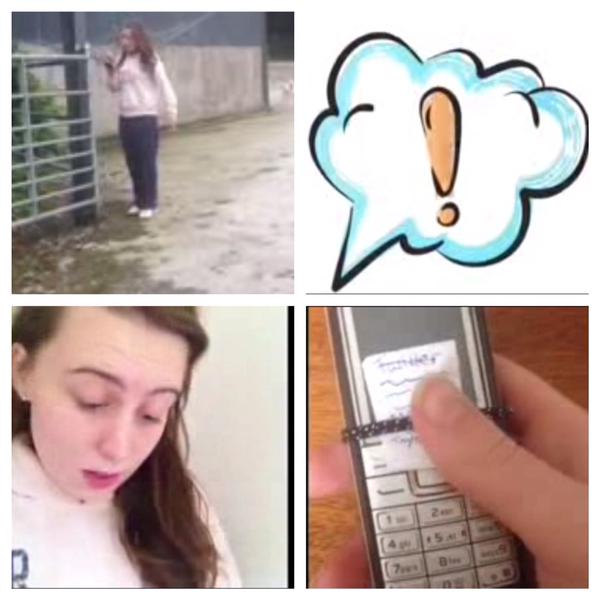
    They selected my poem ‘Disconnection’ (you can read it here) to discuss in class and Aisling offered them some options to respond to the poem.

    Aisling forwarded me a selection of the responses; I was blown away by how creative they were.

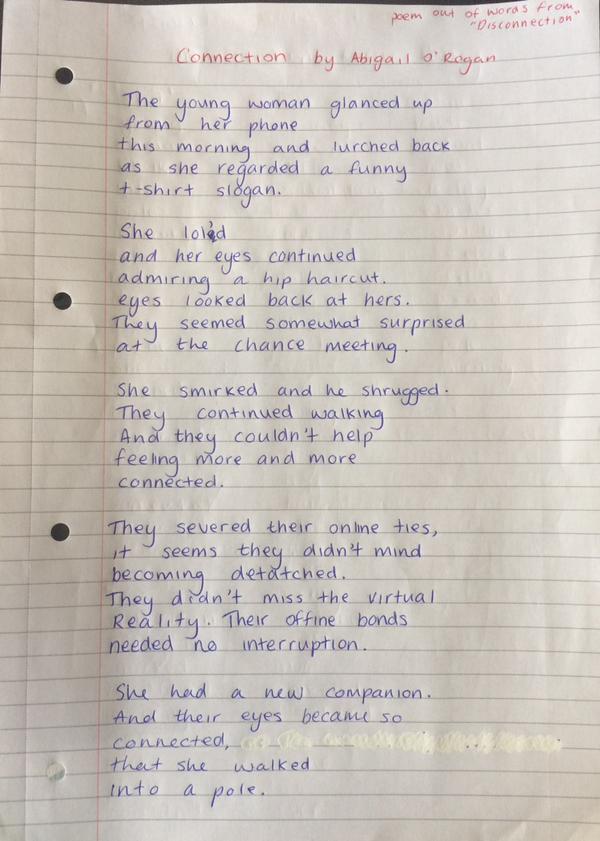
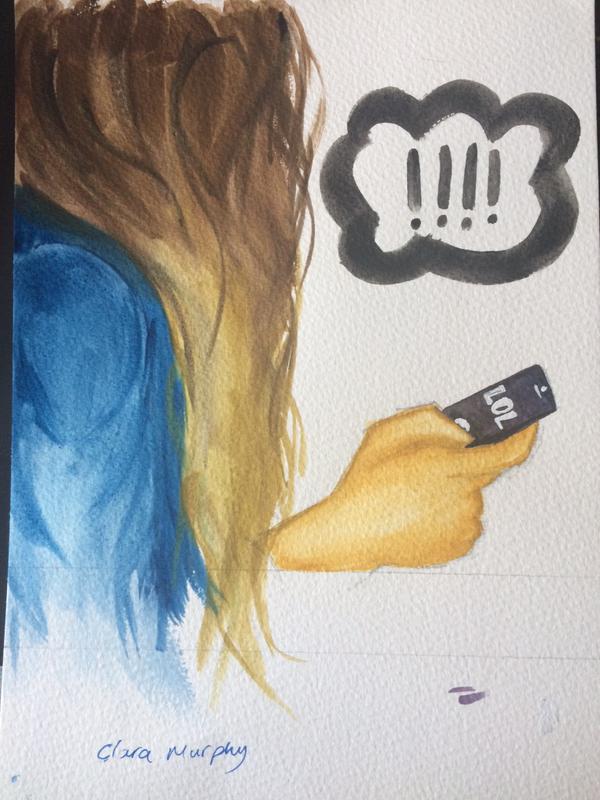
    For example, there were three very different movies, an artwork, a ‘storyboard’ of the poem, two poems that were written using only the words from ‘Disconnection’ and a couple of fake twitter pages of the young woman who walked into the pole (one student decided it was Kim Kardashian who walked into the pole).
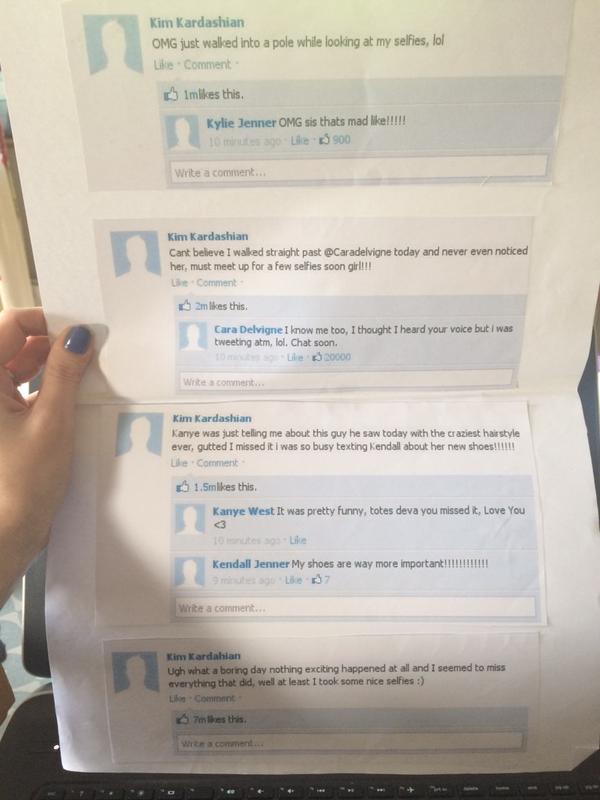
    Another student created a fake Facebook profile online for the young woman who walked into the pole.

    Some students did without their mobile phone for 24 hours and wrote a diary entry about the experience. One girl cooked a Sunday dinner for her family and went for a long walk as she felt she had nothing else to do when she didn’t have her phone.

    I was thrilled to ‘connect’ with this class via poetry, and very moved by the funny and diverse responses. It is such a privilege when someone takes the time and effort to read and consider what I write, so to the talented fifth year girls and Aisling O’Connor of St Mary’s Secondary School, Mallow: congratulations on your enthusiasm and spirit, and a heartfelt thank you.

  • Poem a day for 30 April 2015: multiple miaows


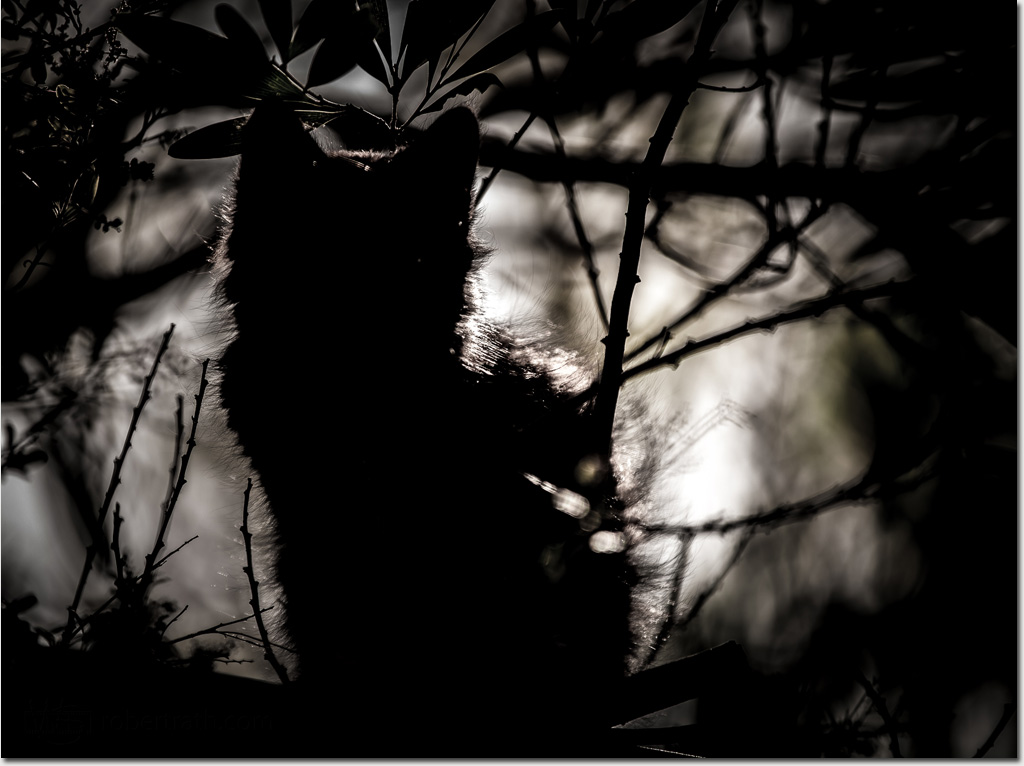
    The Beast. Photo by Robert Rath from Robert’s website.

    And so, the end is here. The final poem of the 30-poems-in-30-days madness. Thank you for reading and taking the time to comment and provide feedback. You don’t know how much I appreciated it; knowing you were somewhere with me on that lonely marathon track boosted my energy no end.

    Today’s poem is a bit Schrödinger-meets-T-S-Eliot. You can read about the Schrödinger’s cat quantum mechanics thought experiment here and about Old Possum’s Book of Practical Cats by T S Eliot here.

    multiple miaows

    Schrödinger’s cat
    has been let out of the bag;
    photos of her
    posted all over the internet;
    quite the cat-about-town
    double-slitty-kitty eyes
    curious,
    commanding your attention;
    swish of a stringy tail
    and twitch of a whisker
    demanding that you
    entangle with her;
    you love and hate her
    wonder who named her
    observe her now
    in her cute-pussy pose
    to determine
    her fate.
    Here’s looking at you, Kitty.
    (So who’s watching us?)

  • Poem a day for 29 April 2015: possession


    Ghostly Ivories. Photo by Robert Rath from Robert’s website.

    And today’s poem, penultimate for the month: three spooky little quatrains for you. This poem poses more questions than it offers answers: who or what is possessing whom? or what? and who or what is haunting this poem?

    The fourth line insisted on being there even though it seems out of place. The line ‘little stitches join this world with the other’ is from The Celtic Twilight, a collection of Irish folklore compiled by W B Yeats.

    possession

    coins that jingle in a dead man’s pockets
    place them face-up on his still-warm eyes
    we think we’re alive but are the dead really dead
    feet that bleed on slippy prison tiles

    who removed the roses I’d placed on the table
    scattering petals all over the floor
    why was the kettle hot, when I’d been away
    who moaned ‘always’ as I sat here, alone

    little stitches join this world with the other
    little boy recounts a life already lived
    unexpected shadows cast a sudden glamour
    what we had hoped for cannot be disbelieved

  • Poem a day for 28 April 2015: ticktockticktockticktock


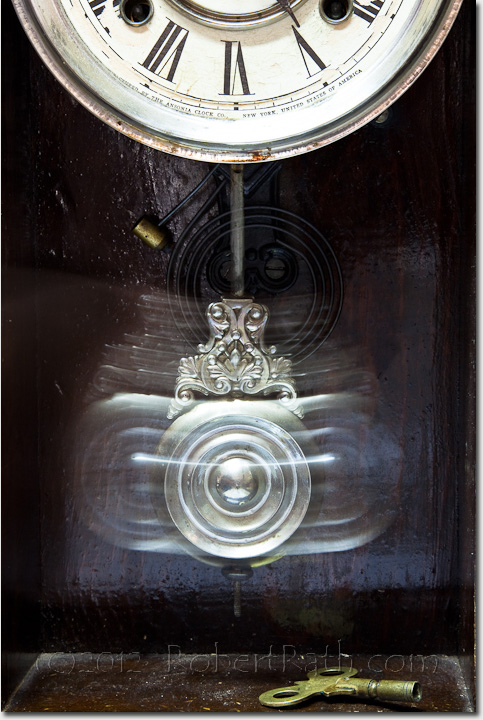
    The End of Time. Photo by Robert Rath from Robert’s website.

    If I had had a bit more time I might have played around with the layout of this piece. I decided not to, given that the poem is also posted to Facebook, where I have zero control over the layout.

    ticktockticktockticktock

    I can count on it.
    I can never wait for it
    anticipate it
    brace for it.
    Day may be breaking
    light might be fading
    night might be closing.
    Stars may be high
    seas may be smooth
    everything fine.
    Maybe I hear a Rose melody
    sniff a faint trace of Brylcreem
    see an MG on the street
    see someone wearing a Harris Tweed.
    Maybe my thoughts wander
    into no-go territory
    when
    snap! just like that
    my intimate alien takes control
    cauterises my heart
    slashes the me–world connection
    rips out the pain-relief IV
    shreds any dignity
    unleashes on me
    the canker of your absence.
    One certain moment.
    I can count on it.

  • Poem a day for 27 April 2015: why / i can / how do / why don’t


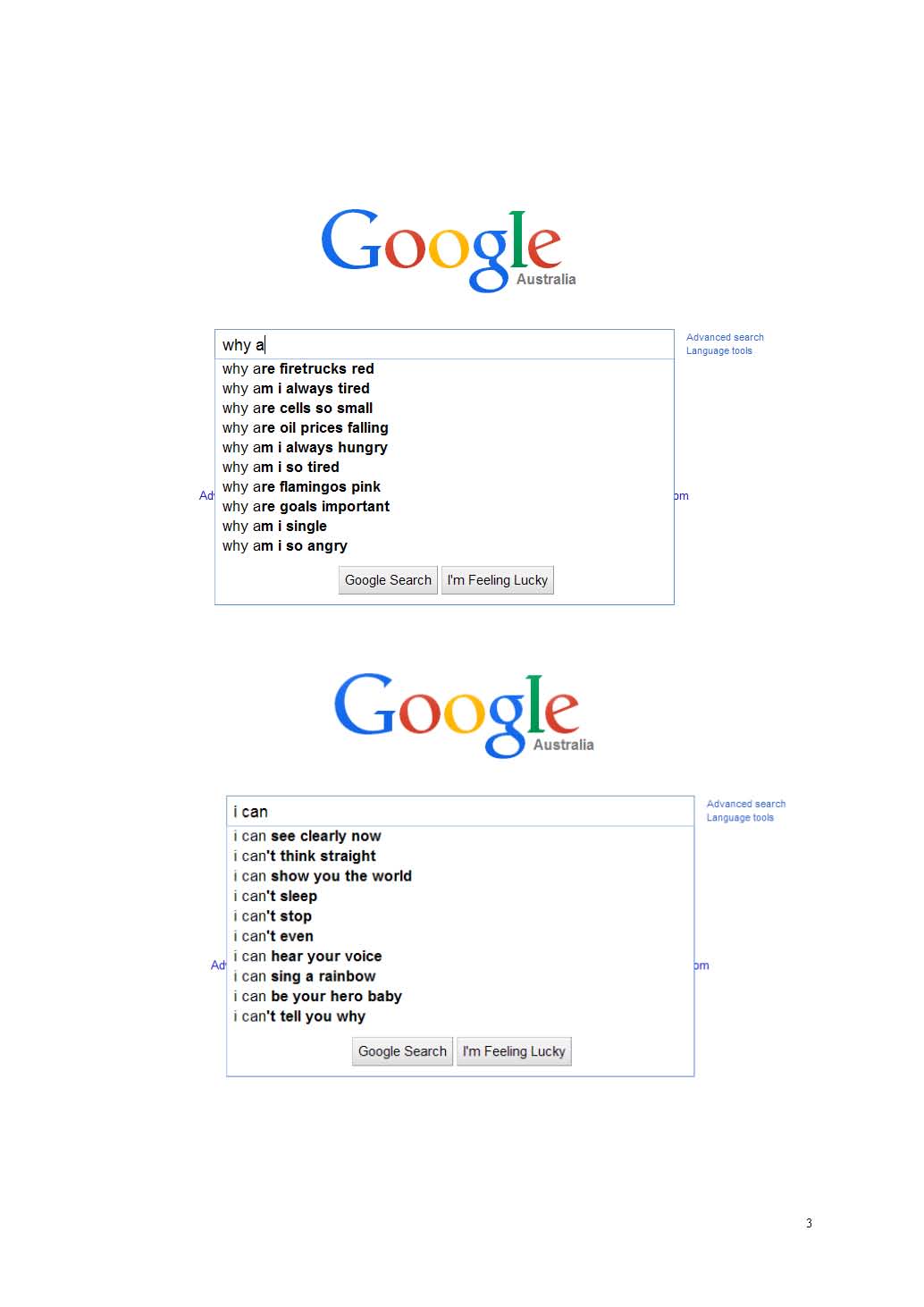
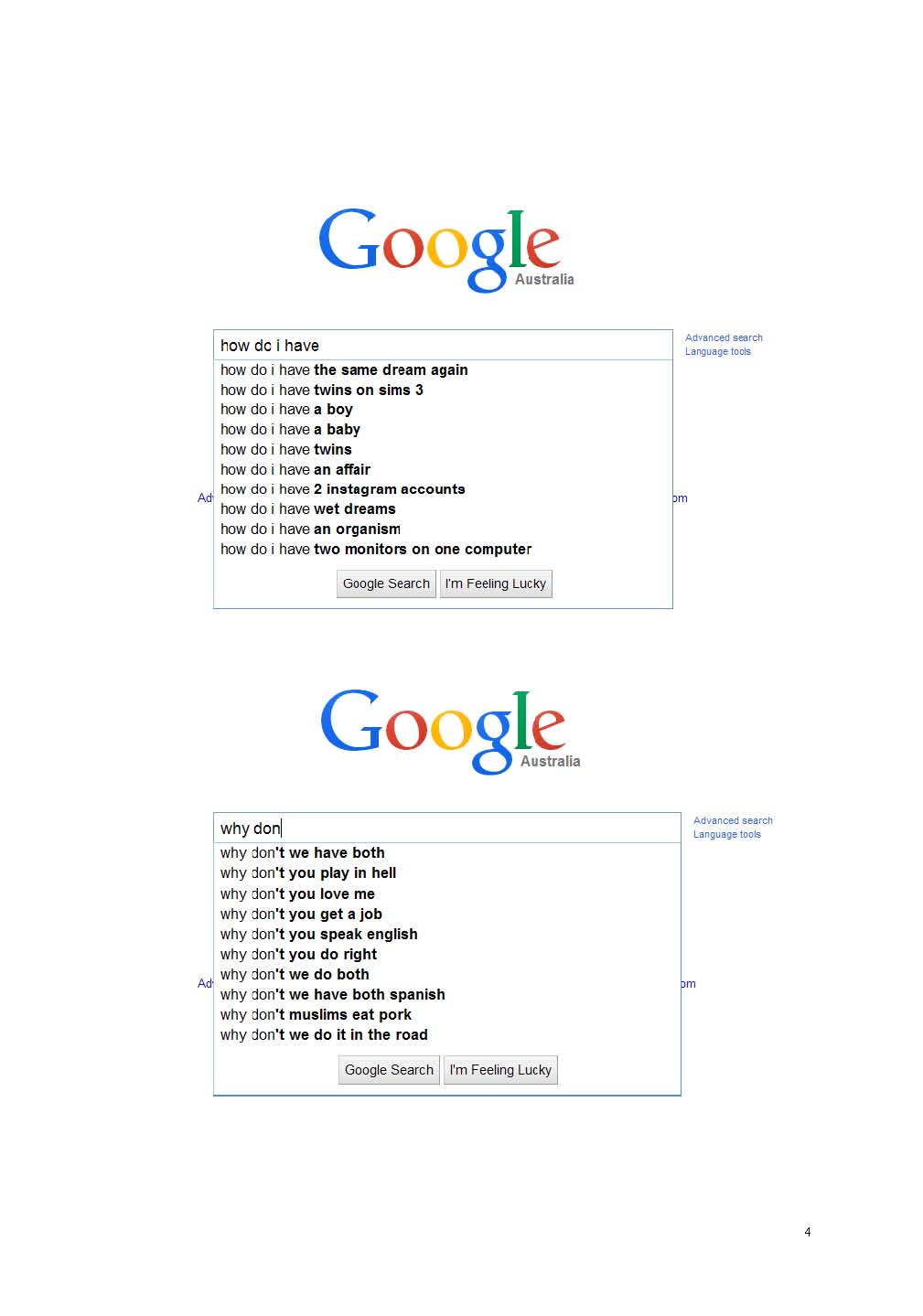
    To be honest, my inspiration well was running dry today so I decided to generate a few Google Poetics. This involves typing words into Google and allowing it to autocomplete your search, then taking a screenshot of the results. You can read some great examples over here at the Google Poetics website. To quote the front page: “Google writes poetry on subjects that people are truly interested in”.

    I’ve typed out the results so that the gems are a bit easier to read!

    why / i can / how do / why don’t

    why are firetrucks red
    why am i always tired
    why are cells so small
    why are oil prices falling
    why am i always hungry
    why am i so tired
    why are flamingoes pink
    why are goals important
    why am i single
    why am i so angry

    i can see clearly now
    i can’t think straight
    i can show you the world
    i can’t sleep
    i can’t stop
    i can’t even
    i can hear your voice
    i can sing a rainbow
    i can be your hero baby
    i can’t tell you why

    how do i have the same dream again
    how do i have twins on sims 3
    how do i have a boy
    how do i have a baby
    how do i have twins
    how do i have an affair
    how do i have 2 instagram accounts
    how do i have wet dreams
    how do i have an organism
    how do i have two monitors on one computer

    why don’t we have both
    why don’t you play in hell
    why don’t you love me
    why don’t you get a job
    why don’t you speak english
    why don’t you do right
    why don’t we do both
    why don’t we have both spanish
    why don’t muslims eat pork
    why don’t we do it in the road

  • Poem a day for 26 April 2015: The Ex-Files


    Holding On To The Rail. Photo by Robert Rath from Robert’s website.

    I was a massive fan of ‘The X-Files’ ‘back in the day’ and I’ve recently started watching ‘The Fall’ starring Gillian Anderson (who used to play Agent Dana Scully in ‘The X-Files’).

    This evening I reached for The X-Files Book of the Unexplained, which was a present from an ex-boyfriend. (Well, he was my boyfriend when he gave me the book!)

    And so, today’s offering, bringing together exes and X-Files.

    The Ex-Files

    Mulder: “Ask an important question and you’re on your way to the pertinent answer.”
    Scully: “Imagine a miracle and you’re half way there.”

    Alternative dimensions.
    Believer.
    Crisis after crisis.
    Debunking myths.
    Disbelief.
    History.
    In a messy space.
    In search of the truth.
    Inexplicable.
    No tangible evidence.
    Out there.
    Questions that remain unanswered.
    Skeptic.
    Smoke screens and salvage operations.
    Strange and unexplained.
    The truth is out there.
    Threats and paranoias.
    Trust no-one.
    Unfinished business.
    Unidentified extras.
    Unusual encounters.
    Weird nature.

    I want to believe.
    Leap of faith.
    Miracle man.

  • Poem a day for 25 April 2015: éʜɔilɔ ƨƨɒlǫ ǫniʞool / looking glass cliché


    Mirror image. Photo by Robert Rath from Robert’s website.

    I’ve always been able to handwrite ‘fluently’ in mirror writing; today I discovered that it’s not possible to do it in Word 2007 without using horrible WordArt. I also found that most online tools don’t offer a true mirror function; they flip and switch, but some letters still face the ‘normal’ way. The closest/best tool was this one here but the resulting text is still not a true mirror (it has turned some of the lower-case letters to upper case; and all the commas, as well as the accent on the ‘e’ in cliché, are facing the wrong way). In spite of these challenges, here’s a thought for today.

    éʜɔilɔ ƨƨɒlǫ ǫniʞool

    bnim ɿuoy nɘʜW
    ,ƨǫniʜƚ ƚƨiwƚ oƚ ƨɘbiɔɘb
    ,ƨǫniʜƚ ɘƚɒɔilqmoɔ
    ,ƨnoiƚnɘƚni ƨ’ɿɘʜƚonɒ bɘɿʜƨ
    ,ƚnɘmɘǫbuႱ oƚ qmuႱ
    ɘmiƚ ƨ’ƚi nɘʜƚ
    .ɿoɿɿim ɘʜƚ ni ʞool oƚ

    And in case you haven’t a mirror close by:

    looking glass cliché

    When your mind
    decides to twist things,
    complicate things,
    jump to judgement,
    shred another’s intentions,
    it’s time
    to look in the mirror.

  • Poem a day for 24 April 2015: How many sides does a line have?


    Crazy. Photo by Robert Rath from Robert’s website.

    I was hunting around for a writing prompt; a commenter to this article over here suggested drawing a card from a card deck called Oblique Strategies and using the text as a starting point. I downloaded the free Oblique Strategies app that allows you ‘draw’ a card, but cycling through them I decided to collate a selection of the strategies themselves – slightly modified here and there – into today’s poem.

    How many sides does a line have?

    Listen to the quiet voice.
    Listen in total darkness
    or in a very large room, very quietly.
    Do the words need changing?
    Use your own ideas.
    Retrace your steps;
    move towards the unimportant
    into the impossible.
    Are there sections?
    Where is the edge?
    Go to an extreme, move back to a more comfortable place
    and remember to consider transitions
    but change nothing; breathe more deeply.
    Trust in the you of now
    then distort time:
    what were you really thinking about just now?
    You can only make one dot at a time
    but this gives the game away:
    a line has two sides.

  • Poem a day for 23 April 2015: i. am. will. any other name smell this sweet?


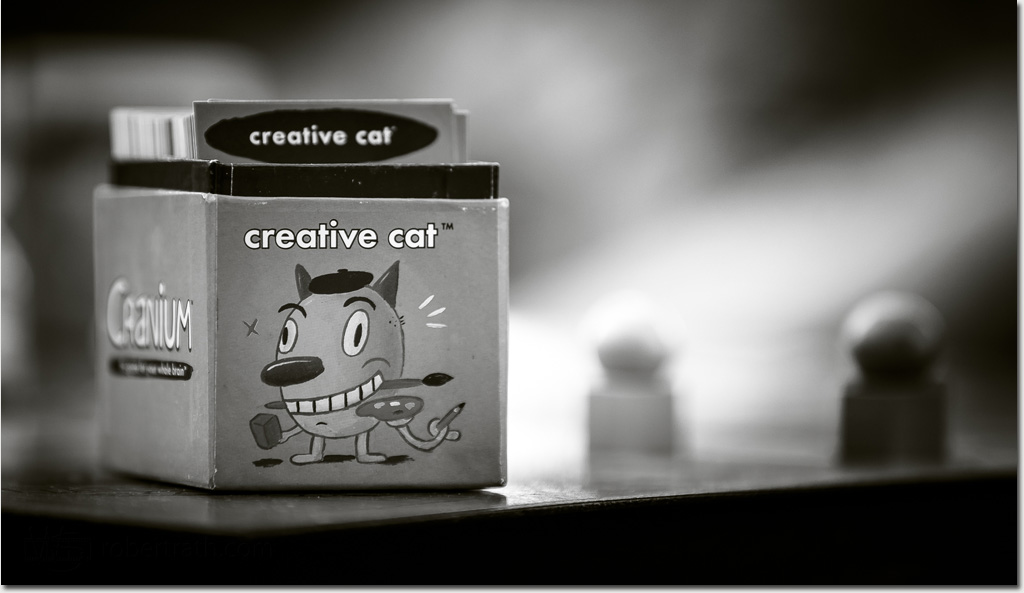
    Creative Cat. Photo by Robert Rath from Robert’s website.

    Today is William Shakespeare’s birthday: he was born in Stratford-upon-Avon, England, in 1564, so I thought I’d have a bit of fun. There is a school of thought that subscribes to the idea that playwright Christopher Marlowe, a contemporary of Shakespeare, was in fact the author of the Shakespeare plays. (Academics distance themselves in horror from this idea.) In Ros Barber’s fabulous prize-winning verse novel, The Marlowe Papers, Marlowe considers his past and faked death; a book definitely worth reading.

    In today’s poem I’ve mixed some plays by Shakespeare with one by Marlowe, included some Shakespeare references, invented some Elizabethan-sounding words and constructed a few good curses from here. Sincere and abject apologies to the experts. And if this poem sounds clichéd, it’s because most clichés in fact originated from the Shakespeare back-catalogue.

    i. am. will. any other name smell this sweet?

    It will
    all be well in the end, you said,
    but what a tale I heard this winter’s eve
    while dreaming of midsummer nights:
    penmanship from the grave!
    We were but two gentlemen of proximate hamlets;
    now marlovians make much ado about nothing.
    There’ll be a massacre in Paris
    and Denmark ransacked
    before this tempestuous plot takes hold.
    What comedy of errors; mark my words:
    this defamation shrew needs to be tamed.
    I will
    spear those who drag my bardic name
    in the scurling gutter
    mingling it with his scurvy moniker,
    the pribbling, flap-mouthed ratsbane.
    What a piece of work! Such vaulting ambition!
    He may lead his merry wife a dance
    around the globe
    (and well she may like it) yet
    I will not
    yield my labours of love
    to that saucy, pox-marked plague-sore.
    I will go measure for measure
    to claim my writes
    and dance on the grave
    of that yeasty, wart-necked varlot.