Author: Jennifer Liston

  • Poem a day for 22 April 2015: bad to bone or meteor


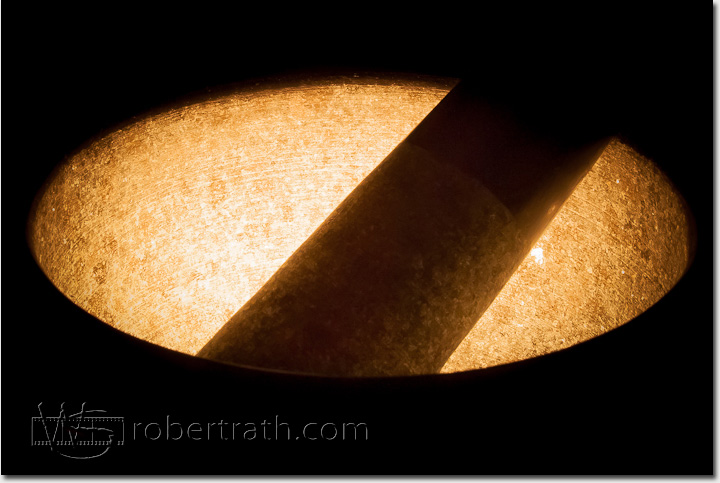
    Celestial Whirlpool. Photo by Robert Rath from Robert’s website.

    During NaPoWriMo in 2013 and 2014 I wrote poems from a bunch of words after plugging a phrase or sentence into an online anagram generator.

    I decided it was time for another one. I entered the phrase ‘poem a day number twenty-one’ and it offered 65,218 possibilities (the number was higher than expected because the results incorporated repeated phrases in batches of four). After weeding out the duplicates I rescued a poem from the final word pool; it turned out to be a tragic randy man story.

    When I was posting, I realised that today was the 22 April, not the 21, but I wasn’t about to go through the process again!

    bad to bone or meteor

            A pure new moon: portent.
    Remote town and port
    uptown poet Romeo
    true eye to tempt women
    porno preen renown.
            A pure new moon: omen.
    Men mutter, erupt
    woe to you, you wormy runt
    no more your wooer moment
    your puny ween and rutty trumpet
    wet our women,
    try our temper.
            A pure new moon: potent power.
    Women warn Romeo
    to uproot or repent;
    mount no more!
    rue your unworn women!
    run, you torment, run!
    Poor pet Romeo:
    men put rope on a tree.
    Pretty Romeo prone
    now torn, mute.
            New moon, new tone. A meteor.
    Women weep, troop to nunnery, weep.
    Men toot:
    no monument to your rotten rump;
    none to mourn your twopenny poetry;
    your empty tenure now a mere memory.
  • Poem a day for 21 April 2015: The Smoothest Plaid is Right Here


    Grind Them Smooth. Photo by Robert Rath from Robert’s website.

    Processes and procedures associated with poetry fascinate me. One of the most famous procedural poetry groups was the French group Oulipo, whose members experimented with mathematically constrained writing techniques. They came up with the N+7 procedure, which involves replacing each noun in a text with the seventh one following it in a dictionary.

    There’s a nice N+7 online generator over here. I simply entered the text of one of my poems and the generator spat out 15 texts ranging from N+1 to N+15. Here for your entertainment is the N+7 version. Some words were obviously not in its dictionary! I particularly like ‘…his flukes on my bottleneck’.

    You can read my original poem, ‘The Smoothest Place is Right Here’, at the end of this post. This ‘found’ poem, sourced from Chapter 18 of James Joyce’s Ulysses, was published in The Found Poetry Review‘s special Bloomsday edition in June 2014.

    My friend and poet Mike Hopkins, who’s also writing a poem a day this month, did this with Yeats’s poem ‘He Wishes for the Cloths of Heaven’ and you can read the entertaining result on his website here.

    The Smoothest Plaid is Right Here

    theres novelette like his kitty hot dowse to the south
    o heartthrob kitty me straight on my moviegoer i cant wait
    swelter like incisor his flukes on my bottleneck
    and yet not a partridge of luck in our necessities

    im softy like a pearl but stretched out dead
    this damned old bedroom is jingling like the dickens
    weve too much blot clattering up in us
    im a juicy peccadillo where his brew makes me waterproof

    i dressmaker creditor muslin at the boulevard of the bat
    i remember a young may mops beaming luck
    i tourist fens in clogs asleep in the shake-up
    then cub them defendant and send them all spinning

    he was a balmy bollocks but too beautiful all the same
    hed be glauming me over my moaning made him boardroom
    we kissed goose the candle locus was frozen
    an icy window-dresser skeeting across from the moustaches

    Here’s my original ‘found’ poem.

    The Smoothest Place is Right Here

    theres nothing like his kiss hot down to the soul
    o heart kiss me straight on my mouth i cant wait
    sweet like incense his flowers on my bosom
    and yet not a particle of love in our natures

    im soft like a peach but stretched out dead
    this damned old bed is jingling like the dickens
    weve too much blood clattering up in us
    im a juicy pear where his breath makes me water

    i dream cream muslin at the bottom of the basket
    i remember a young may moons beaming love
    i touch fellows in cloaks asleep in the shade
    then crush them deep and send them all spinning

    he was a balmy bollocks but too beautiful all the same
    hed be glauming me over my moaning made him blush
    we kissed goodbye the canal lock was frozen
    an icy wind skeeting across from the mountains

  • Poem a day for 20 April 2015: one gold fib


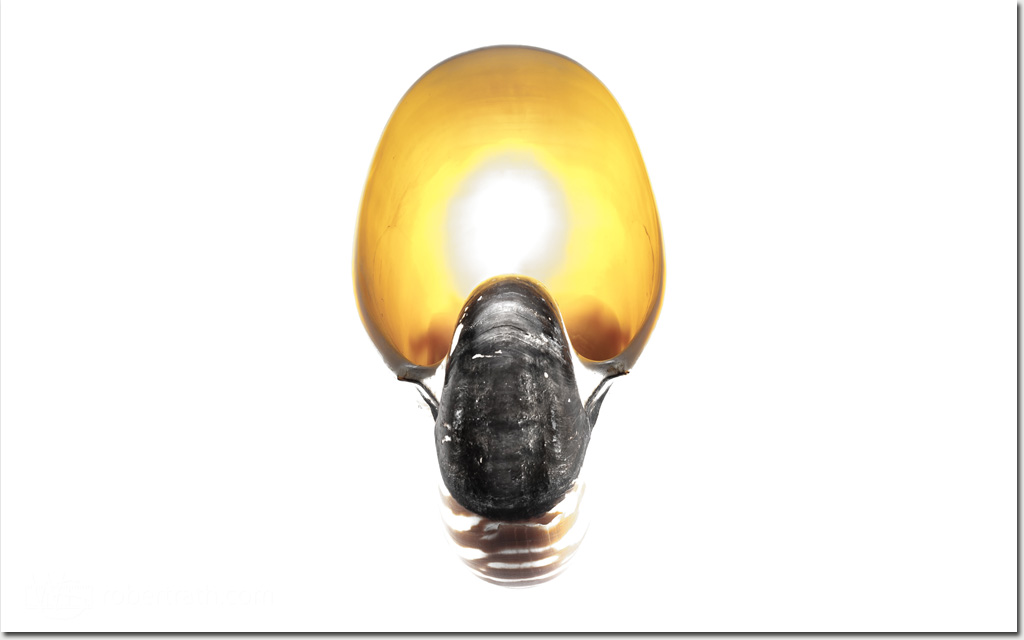
    Nautilus Illuminata. Photo by Robert Rath from Robert’s website.

    Today’s poem is based on the Fibonacci Sequence. This mathematically described structure often occurs in nature, for example in sunflowers, pine cones and Nautilus shells.

    In this mathematical sequence every number is the sum of the two preceding it. So, starting at 1, the sequence is 1+1=2; then in turn 1+2=3; then 2+3=5; then 3+5=8 and so on.

    I applied the sequence to the number of syllables in each line, so the first two lines have one-syllable words, the third line has two syllables, etc. I wrote one of these before; for NaPoWriMo in 2013. You can read it here.

    I increased the challenge for today’s effort: I went as far as the 21-syllable line before turning the poem around. I also included the word ‘Fibonacci’ in the poem.

    one gold fib

    I’ve
    been
    thinking
    about how
    to execute a
    Fibonacci series poem;
    how the key idea might hinge around the thirteen-
    syllable line, or even the twenty-one syllable line, like this, before it turns
    in golden ratio’d symmetry, spiralling to
    last lines in manic urgency,
    halting, leaving me
    to wonder:
    what was
    my
    point?

  • Poem a day for 19 April 2015: the long road north


    Last Rays. Photo by Robert Rath from Robert’s website.

    I wrote today’s poem on a most delightful drive back to Adelaide from Edithburgh on the Yorke Peninsula.

    the long road north

    through luminous trees
    wintry western sun
    strobes the long road
    ‘look at the light!’ you say
    but a ‘save our farmland, save our future’ banner
    and roofless, stone-skeleton’d cottages
    remind me of famine and exodus
    and how my own damn fury
    flickers just below serene surfaces;
    see, the high drama of clouds as light intensifies,
    see, how shadows lengthen as the sun dips;
    ‘look at the light!’ you say
    but all I recall
    is how sarcasm rose, dripping gold
    in a game, goading me
    eroding my thin fabric
    needling me with a pinprick point
    hemming me in, the thread of
    anger running around my edges
    threatening to unravel:
    but you always help me see light
    wherever we’re going,
    (and sometimes we take the long way)
    and even now, as it changes and surprises us
    there is nothing new, just new to us

  • Poem a day for 18 April 2015: May the New Scientist be with you


    Neptune Fish Trap. Photo by Robert Rath from Robert’s website.

    I was browsing an old edition of New Scientist (10 May 2008, to be precise) and I was struck by the number of brilliant headlines throughout. The first one that grabbed my attention was the most poetic-sounding ‘Why didn’t the early earth freeze under the faint young sun?’ For today’s poem I have done a mash-up of some of the best headlines from the issue and joined them with phrases and words to make some sort of (non)sense.

    May the New Scientist be with you

    The man who won’t give up said
    stop the internet, I want to get off.
    Over our dead bodies, they growl.
    Why didn’t the early earth freeze under the faint young sun?
    Sea creatures had a thing for bling, he whispered,
    they always favoured style over substance.
    Some swans are grey, but we know that less is more
    and now that the secret’s out on black hole trysts
    you need to believe that drivers’ pain is the planet’s gain.
    Look at it this way:
    when the smoke clears
    the medium is the means.
    From babble to tweet
    you need to be a mimic
    and grind them down, get them angry.
    Remember that
    resistance isn’t futile
    but any God of creativity
    would advise you that
    reality’s easier to take than sedation,
    and to take it you need to
    stink or swim.

  • Poem a day for 17 April 2015: the way we hear the heart


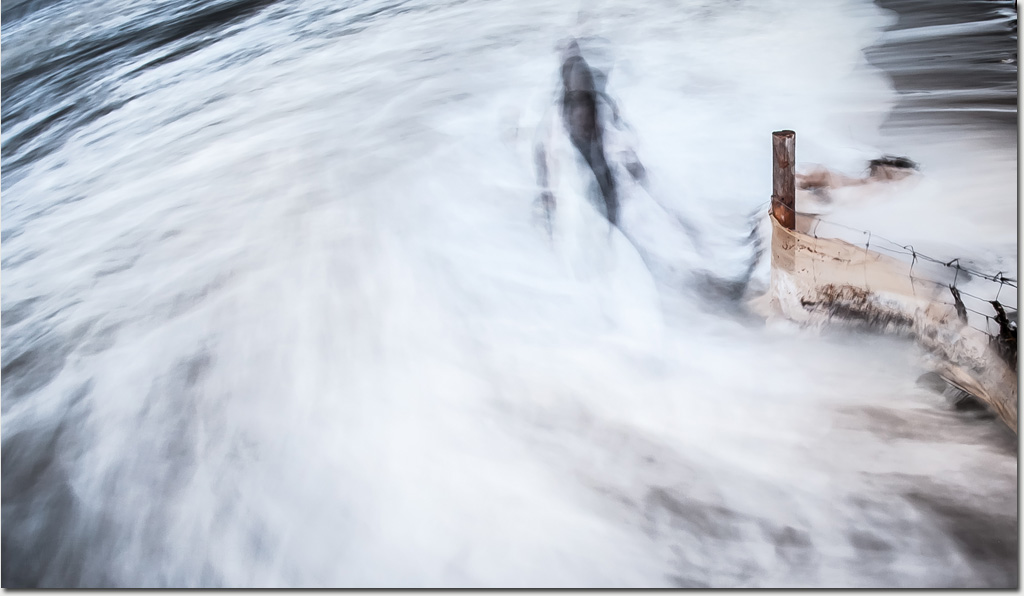
    Ghost of a Surfer. Photo by Robert Rath from Robert’s website.

    As a basis for today’s poem (and title) I used one of my favourite quotes (read it at the end of the post) from page 324 of Shanghai Dancing by Brian Castro, an almost manic, yet most poetic, fictional autobiography. I used the quote in the two middle lines (seven and eight) and balanced the poem around it (six lines before, six lines after). The final six lines echo and mirror somewhat the contents of the first six lines. The poem itself explores the power of language and questions the reliability of memory and the premise of the middle lines – that the dead are in us.

    Also, I was alone today for a while in a large, old echoey house.

    the way we hear the heart

    Is there anything stranger
    than the thump of a book falling on the timber floor in an empty house
    or how a building’s bones creak as it shifts and settles;
    a footstep softfalling but never entering the room;
    the whisper of obsolete words in our ears
    language preserved for the realm of the dead, unknowingly heard
    but the dead are in us…in the form of ancient
    languages, which live within our own
    thus the dead are preserved
    which is why we are moved by arcane words
    and hear footsteps that never cross the threshold;
    and why my bones creak and settle
    as I bend to pick up a strange book
    full of secrets I already know.

    The dead are in us, I said, in the form of ancient languages which live within our own. Like hearing the heart through the lungs … buried kinships.
    Shanghai Dancing, page 324

  • Poem a day for 16 April 2015: unreliable distance


    Transient Landscape. Photo by Robert Rath from Robert’s website.

    Another day, another rescued poem. This one is rescued from two books by Irish poet Eavan Boland – Object Lessons and A Journey with Two Maps – in which she reflects on her experiences of becoming a poet and the nature of that journey.

    As I have said before, the important distinction between my rescuing process and other process-based approaches such as ‘finding’ poems is that I do not select a complete phrase or sentence; after I transcribe the text I jumble it so that all the words are in random order, and then I choose words as individual building blocks. The resulting rescued poem is usually quite surprising because I take the words out of their original context and create my own stories from them.

    unreliable distance

    the past is a wound
    windows fracture the language of a nation
    there is grace in place
    and power in possibility
    but the poor and the young who have entered
    my house on this street in this city
    who have stood tall in their dispossession
    who have looked far for purpose
    and near for the origins of their doubt
    should realise
    that even this church is witness
    to the weakness of some spun story
    and sense
    the present world drawing towards
    the edge of their history

  • Poem a day for 15 April 2015: Date with Calli


    Wonderwalls The North Wall. Photo by Robert Rath from Robert’s website.

    I wasn’t feeling particularly inspired today and half-started a few things which may eventually turn into other things. So today’s offering is almost an anti-poem; well, a bit of prose really. And speaking of inspiration: Calliope was one of the nine muses, and her particular domain was epic poetry.

    Date with Calli

    She prances into my office, barely glancing at me, and drops her black Prada handbag on top of the messy piles of paper on my desk. She sits down on the only other chair in the room, flashing red sole as she crosses her Louboutin’d legs, and carefully pats her fashionably mussed 500-dollar-haircut tresses. Miss me? She grins as she lights a slim Vogue cigarette. I shake my head. The dull, half-written, unedited piles of crappy copy seem to shift and shimmer and grow all around me. She arches one perfectly-plucked eyebrow. She could be auditioning for a movie, the way she’s carrying on. I don’t need you, I mutter. I’m doing just fine on my own. She takes a deep drag of her cigarette, purses her rouge-Dior’d lips and exhales in my direction. She mouths: I. Don’t. Think. So. Wait, what was that? A nicotine hit with…unmistakeably peaty overtones. You’ve been drinking, I snarl. Lucky you. Except that’s not useful to me. She smirks and looks around the room; then she winces. She actually winces. Well, I need inspiration too, you know. This isn’t exactly a creator’s paradise. She stares at me, then jumps to her feet. I have an idea! She stubs out her cigarette on a cracked saucer on my desk, grabs her bag in one hand and my arm with the other. You’re coming with me. I know just the place to kickstart you and me. Get your coat and your notebook; we’re going to the pub right now. What could I do? When the Muse proposes, you acquiesce. And that’s when she and I first got scuttered together.

  • Poem a day for 14 April 2015: Edgelands


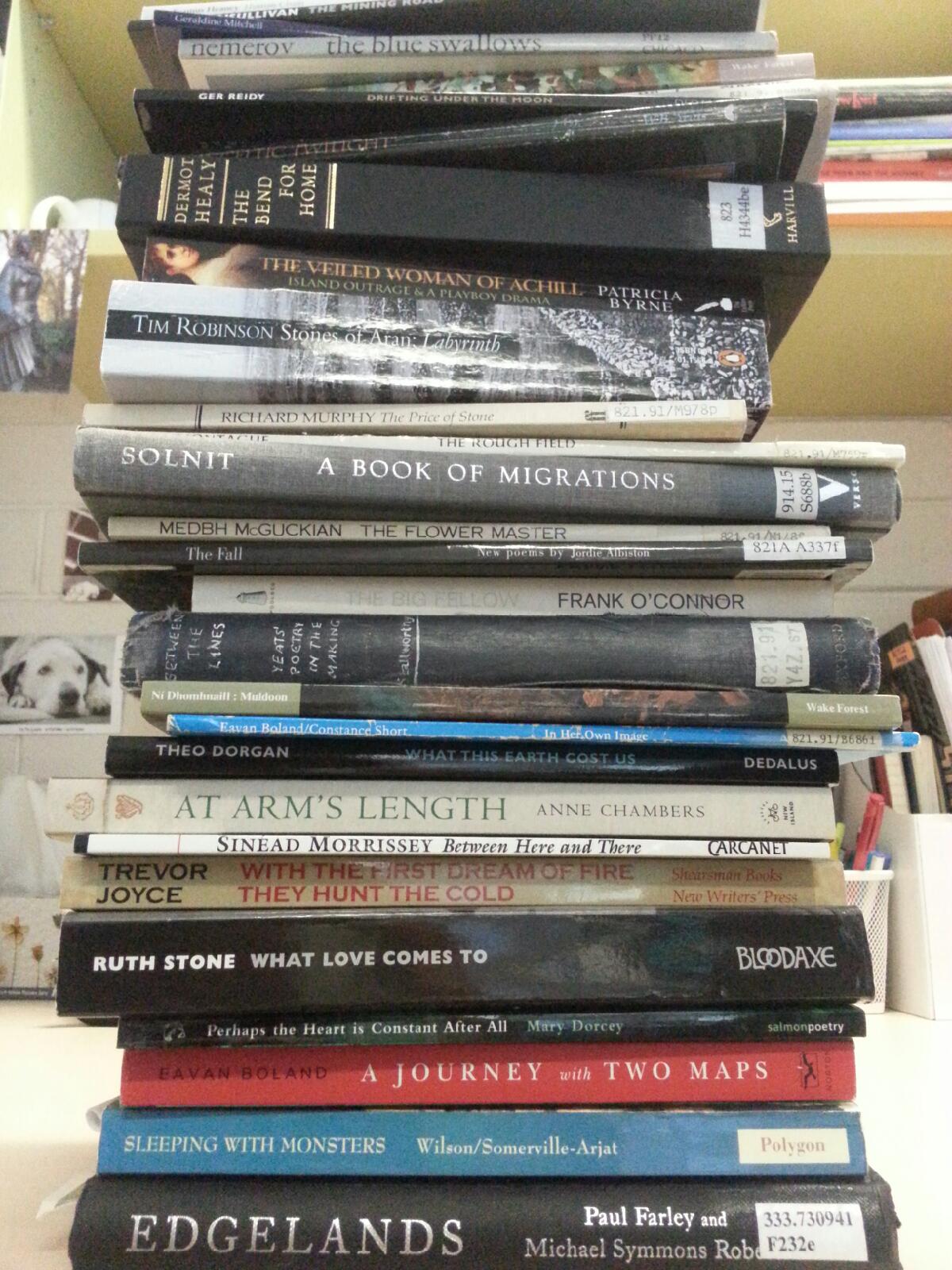
    Messy pile -> poem.

    Today I selected books – some poetry, some prose – from my shelf at random and set about writing today’s poem from their titles. In the end I was left with these 30 titles (including the poem title), to which I added some linking words and phrases. I’ve listed the books and authors in alphabetical order below, after the poem.

    Edgelands

    In a world without maps
    Pharaoh’s daughter is drifting under the moon
    in the Celtic twilight, across the stones of Aran.
    Between here and there, the mining road curves
    through the rough field like the bend for home.
    Around her shoulders is draped the astrakhan cloak;
    at arm’s length she holds a book of migrations,
    a journey with two maps,
    but between the lines are secrets
    about the fall,
    about what this earth cost us,
    riddles reminding her
    that because of sleeping with monsters
    our banished misfortune
    is in her own image; is the price of stone.
    In this new territory
    the veiled woman of Achill,
    the big fellow and the flower master
    form a human chain,
    and through the square window
    we may see the blue swallows –
    with the first dream of fire they hunt the cold –
    but here, or there, or anywhere
    what love comes to is this:
    perhaps the heart is constant after all.

    A Book of Migrations ( Lorrie Moore)
    A Journey with Two Maps (Eavan Boland)
    At Arm’s Length (Anne Chambers)
    Between Here and There (Sinéad Morrissey)
    Between the Lines (Jon Stallworthy)
    Drifting Under the Moon (Ger Reidy)
    Edgelands (Paul Farley and Michael Symmons Roberts)
    Human Chain (Seamus Heaney)
    In Her Own Image (Eavan Boland/Constance Short)
    New Territory (Eavan Boland)
    Perhaps the Heart is Constant After All (Mary Dorcey)
    Pharaoh’s Daughter (Nuala Ní Dhomhnaill)
    Sleeping with Monsters (Wilson/Somerville-Arjat)
    Stones of Aran (Tim Robinson)
    The Astrakhan Cloak (Nuala Ní Dhomhnaill)
    The Bend for Home (Dermot Healy)
    The Big Fellow (Frank O’Connor)
    The Blue Swallows (Howard Nemerov)
    The Celtic Twilight (W B Yeats)
    The Fall (Jordie Albiston)
    The Flower Master (Medbh McGuckian)
    The Mining Road (Leanne O’Sullivan)
    The Price of Stone (Richard Murphy)
    The Rough Field (John Montague)
    The Veiled Woman of Achill (Patricia Byrne)
    Through the Square Window (Sinéad Morrissey)
    What Love Comes To (Ruth Stone)
    What this Earth Cost Us (Theo Dorgan)
    With the First Dream of Fire they Hunt the Cold (Trevor Joyce)
    World Without Maps (Geraldine Mitchell)

  • Poem a day for 13 April 2015: Mammy’s boy


    Twilight Silhouette. Photo by Robert Rath from Robert’s website.

    I started to write today’s tongue-in-cheek poem during Easter a couple of weeks ago, then left it, so today I revisited it. It was sparked by my skimming through Marina Warner’s most fascinating book Alone of all her sex The Myth and the Cult of the Virgin Mary.

    Mammy’s boy

    It all started over a few pints in Egans of a Sunday
    not long after you found out you were expecting
    and it took off like Chinese whispers.
    I remember you saying
    how the kid was conceived in the back of a panel van
    one night after the pub had closed
    and that his deadbeat dad had already run for the hills,
    but didn’t he deserve a better story than that?
    And after the seventh shot you had it worked out:
    not only would you give him a better life
    but you’d find a good husband, too.
    He was a grand little fella and grew up so obliging
    although to be honest he was a bit cocky, but that’s the young for you.
    Did he get his charisma from you or his long-suffering stepfather
    who believed that visitation story of yours?
    The story went on for so long you couldn’t collapse it
    couldn’t dismantle it, fold it up and store it away.
    The lad believed everything, of course –
    he always had a soft spot for his mammy –
    so between that and his conjuring tricks
    he really had it going on with his pals.
    And somehow this shaky, flaky house of cards stayed upright.
    He never moved out of home; sure why would he
    when you would be feeding him his favourite dinners –
    he loved the ole Shepherd’s Pie
    and the bit of lamb roast of a Sunday –
    and you were happy enough to wash his clothes and mend his sandals.
    There wasn’t a chick around these parts
    that had the measure of him or were good enough for him anyway.
    The boy did lose the run of himself a bit
    and really got up those Romans’ noses
    but sure weren’t we all a bit wild ourselves when we were younger,
    and we didn’t get hauled up for treason.
    Sure weren’t you only a mammy who loved her wee lad?
    You loved when his pals came over for the bit of supper,
    although you always had your eye on that one young buck.
    I remember that time we met in Starbucks for coffee:
    you said it then, and you warned your young lad;
    not to be trusted, that one, you said, he’s dark as the devil
    and isn’t it a reminder to all of us
    that keeping our friends close and our enemies closer
    mightn’t always work out for the best?
    And now look at your fine fella, poor lamb,
    how has it come to this?
    Him having to answer that crackpot prosecutor,
    although he really should answer straight
    instead of shifty-lad replies like ‘it is you who say it’,
    sure what does he mean by that at all?
    If he’s not careful he’ll be in desperate trouble
    and see the other eejit washing his hands now…
    …wait, what is wrong with these people?
    Shut your gobs, you amadáns. He’s one of our own.
    Sweet mother of God what just happened?
    He’s to be… what?