Blog

  • Poem a day for 24 April 2014: Trembling black swan


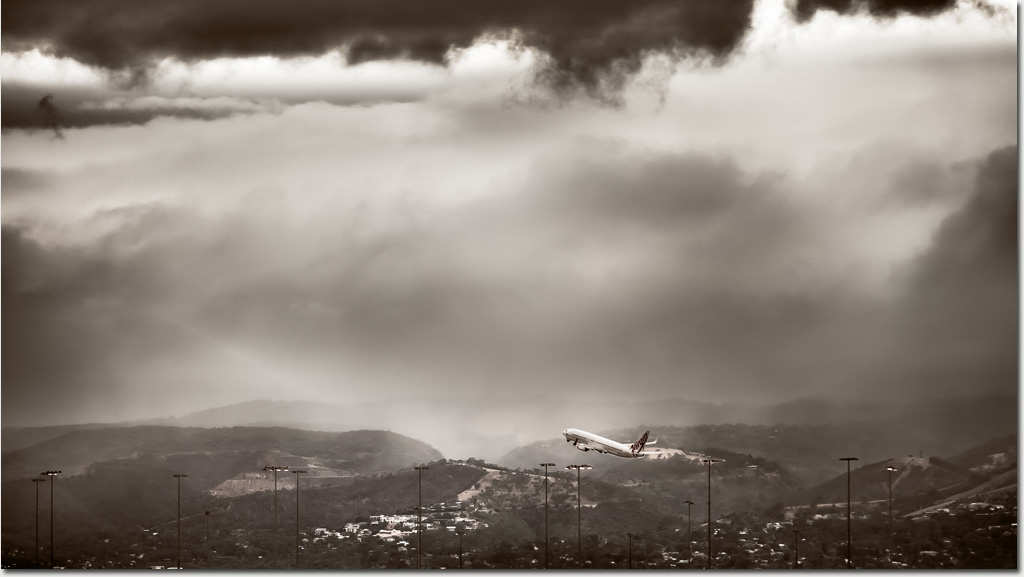
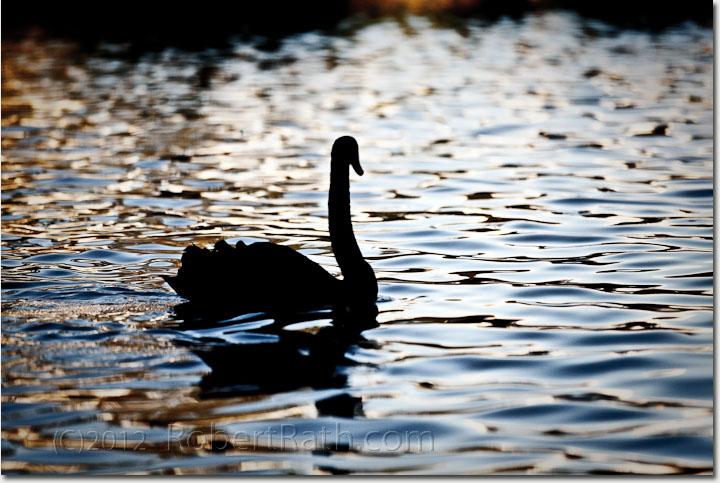
    Silhouette Swan. Photo by Robert Rath from Robert’s website.

    The inspiration for today’s poem is two literary hoaxes; one in Colombia and one in Australia.

    Gabriel García Márquez, Colombian novelist and winner of the 1982 Nobel Prize for Literature, died last week (17 April). Back in 1999 he was treated for lymphatic cancer. On 29 May 2000 a farewell poem, titled ‘La Marioneta’ or ‘The Puppet’ and supposedly written by him, was published in the Peruvian daily La Republica. The poem was in fact written by Mexican ventriloquist, Johnny Welch, for his puppet sidekick ‘Mofles’. Read about it here.

    The Autumn 1944 issue of Australian avant-garde magazine Angry Penguins published a set of poems by Ern Malley. They turned out to be hoax poems written by poets James McAuley and Harold Stewart as a “literary experiment”. Read about it here.

    Dymocks bookshop in Adelaide is hosting an Ern Malley tribute reading this evening at 6 pm.

    For today’s rescued poem (you can read about that process I’ve developed here) I used two source texts: the first is the actual poem, ‘The Puppet’, purported to have been written by Marquez. The second is the text of the preface and statement to the Ern Malley poems (collectively called The Darkening Ecliptic.) The poem title is a combination of two interesting images I chose from the poems: ‘black swan of trespass’ and ‘trembling intuitive arm’.

    Trembling black swan

    Sleep light and dream of cream things
    wait for the genuine moon
    to serenade the stars;
    let each line loiter, knowing
    that wings teach man to walk
    all the way, exposing
    him to tears and sun
    and poems; he will live
    his tiny span of life
    and at a certain dying moment –
    when his little rag
    of soul is falling, falling –
    he will fly.

  • Poem a day for 23 April 2014: Is it snowing where you are, Mr Thiessen?


    Pixellation. Photo by Robert Rath from Robert’s website.

    Today I was browsing the book Adventures in Form for inspiration for today’s poem and I came across a footnote which said that Reginald Fessenden broadcast the first human speech over a radio with the message “1, 2, 3, 4. Is it snowing where you are, Mr Thiessen? If it is, telegraph back and let me know.”

    So I fell down another rabbit hole and found this article about him .

    I decided to write a ‘rescued’ poem (you can read about that process I’ve developed here). I rescued today’s poem from the IEEE article and a Wikipedia article about snow.

    This rescued poem is different from most of my other rescued poems in that the subject doesn’t deviate significantly from the original source texts; that’s probably because I was intrigued by Mr Fessenden the innovator and how unacknowledged he was/is.

    Is it snowing where you are, Mr Thiessen?

    The voice he heard was crystalline and thin
    like the air of thundersnow and cloud
    through which the waves of sound were broadcast.
    Mr Thiessen was indeed astonished
    by the miracle of wireless speech:
    prescient question about that stormy coast
    and its thick and frozen landscape; acoustic echo
    from the gifted Mr Fessenden.

    And a man’s own story is like snowflakes:
    unique and thin words wafting in the ether
    trapped in a transmission atmosphere
    settling onto giant private icebergs;
    or even snowflakes hardened into hail,
    crushing and dampening a private dream.

  • Poem a day for 22 April 2014: Gobbling the gook


    Tanunda Show Clowns. Photo by Robert Rath from Robert’s website.

    I’ve been writing a poem a day and publishing it here each April for the last few years. In 2012 I wrote a fun ‘nonsense’ poem called ‘Washing the hog’ which I had a lot of positive feedback for, so I thought it was time for another one.

    Gobbling the gook

    You bimp me glain an blup me guld
    to nink el seet sotiros
    I bimp de flayne, your gurpy trud
    we ninkie vell de leerus.

    &nbsp&nbsp&nbsp&nbsp&nbsp&nbsp&nbsp&nbspLet’s hippna way me wanti cheer
    &nbsp&nbsp&nbsp&nbsp&nbsp&nbsp&nbsp&nbsphipp no weemy thayring
    &nbsp&nbsp&nbsp&nbsp&nbsp&nbsp&nbsp&nbspwe’ll fing de naypa ciggidy heer
    &nbsp&nbsp&nbsp&nbsp&nbsp&nbsp&nbsp&nbspan you kin ripty claring.

    An you kin vane de bibbly bung
    an you kin stawn de neep-o
    coz win you slean I run de ween
    an wan to bing de kleap-o.

    &nbsp&nbsp&nbsp&nbsp&nbsp&nbsp&nbsp&nbspLet’s hippna way me wanti cheer
    &nbsp&nbsp&nbsp&nbsp&nbsp&nbsp&nbsp&nbsphipp no weemy thayring
    &nbsp&nbsp&nbsp&nbsp&nbsp&nbsp&nbsp&nbspwe’ll fing de naypa ciggidy heer
    &nbsp&nbsp&nbsp&nbsp&nbsp&nbsp&nbsp&nbspan you kin ripty claring.

    I capta loovie you.
    You manka cooby me.
    We fing de sakay noo
    an ripty chaky vee.

    &nbsp&nbsp&nbsp&nbsp&nbsp&nbsp&nbsp&nbspLet’s hippna way me wanti cheer
    &nbsp&nbsp&nbsp&nbsp&nbsp&nbsp&nbsp&nbsphipp no weemy thayring
    &nbsp&nbsp&nbsp&nbsp&nbsp&nbsp&nbsp&nbspwe’ll fing de naypa ciggidy heer
    &nbsp&nbsp&nbsp&nbsp&nbsp&nbsp&nbsp&nbspan you kin ripty claring.

    &nbsp&nbsp&nbsp&nbsp&nbsp&nbsp&nbsp&nbspLet’s hippna way me wanti cheer
    &nbsp&nbsp&nbsp&nbsp&nbsp&nbsp&nbsp&nbsphipp no weemy thayring
    &nbsp&nbsp&nbsp&nbsp&nbsp&nbsp&nbsp&nbspwe’ll fing de naypa ciggidy heer
    &nbsp&nbsp&nbsp&nbsp&nbsp&nbsp&nbsp&nbspan you kin ripty claring.

  • Poem a day for 21 April: Change


    The Change. Photo by Robert Rath from Robert’s website.

    It’s day 21 and we’re at the cusp of two astrological signs, Aries and Taurus.

    Change

    An unseasonally warm north wind
    has blown up,
    knocking over the bins,
    unsettling the dog,
    heating this cool brick house;
    it whooshes away the gum leaves
    that have built up in our driveway
    and around our front door;
    its sad rounded edges buffet me
    as I take in the washing;
    it carries wistful grit that sticks to my skin
    and stings my alien eyes;
    it sighs and sighs as it portends
    endings and clearings and whys and mendings
    and the beginnings of a cool change.

  • Poem a day for 20 April: That quantum leap


    Planet Posidonia. Photo by Robert Rath from over here at Robert’s website.

    This morning I spotted an ad for ‘Quantum Jumping’, which is a meditation program of some sort. I was particularly taken with the line ‘…on an inter-dimensional quest for a better you…’.

    What I enjoyed more, however, was Skepacabra’s sceptical take on it; some of the comments are brilliant. (But be prepared to fall into a time warp if you start to read them.)

    Today’s poem is a somewhat tongue-in-cheek response to this pseudo-scientific gift-wrapping and online hawking (sorry!) of our mental capabilities.

    That quantum leap

    I want to jump between universes
    on an inter-dimensional quest for a better me,
    with a multi-dimensional scream
    I grip white-knuckle-tightly to the silver mental strands
    that keep me connected to here, now,
    and when I land with my spine intact
    (in spite of subjective sneakers weighted down by doubt)
    and lugging a backpack of questions
    I will wander, amazed,
    through the unfamiliar maze of familiar, meet
    my past, other-present, or future self
    and ask for advice on how to write better poems
    and songs, how to play the piano like a pro,
    how to be the best version of me
    and finally ask:
    why have you never jumped into my universe?

  • Poem a day for 19 April 2014: Half-way house


    Simply Beautiful Bokeh. Photo by Robert Rath from over here at Robert’s website.

    This afternoon I (re)watched the 1986 movie ‘Children of a Lesser God’ starring William Hurt and Marlee Matlin (she won an Oscar for her performance). Sarah Norman (Marlee Matlin) is a deaf woman who works at a school for the deaf and hard of hearing. James Leeds (William Hurt) is a speech teacher at the school. Although they fall in love with each other, conflict occurs because he wants her to learn to talk but she doesn’t want to. The movie ends with them reconciling and William Hurt’s character saying: “Is there someplace that we can meet that’s not in silence and not in sound?”

    This turned out to be the prompt for today’s poem.

    Half-way house

    Somewhere between silence and sound
    beginnings and ends curl around
    each other, blending and fending off the in-between;
    lips part in surprise:
    an unheard word half-forms and fades,
    a lemon-scented intention on the exhale.

    In the no-man’s land between silence and sound
    the air is spare and the earth is mute;
    your cells stir and your blood simmers
    and you marshal your resources for quiet combat.

    Then there’s that place
    half-way between silence and sound
    when he might look at you
    and lean in to kiss you.

  • Poem a day for 18 April: Snow White


    Preparations. Photo by Robert Rath from over here at Robert’s website.

    I slipped into a cool virtual rabbit hole today. I came across poet John Gallaher who posted some poems by another poet, Alfred Starr Hamilton.

    Today’s poem (including rhymes and word transitions) is modelled closely on Hamilton’s wonderful ‘Cinderella’ (which you can read if you scroll down to Gallaher’s post dated Saturday March 23, 2013).

    It looks fairly simple, but in fact it was quite challenging to find a useful combination of compound words and rhymes while maintaining a surrealist feel.

    Snow White

    after ‘Cinderella’ by Alfred Starr Hamilton

    were you ever a little skylark
    out in the dark
    not too tiny a skylark
    but a little skylark
    and the way was dark

    were you ever a little skylark
    out in the sky
    not a big sky
    but a little sky
    and the way was dark

    and you had your light with you
    not too big a light
    but a little light
    and your name was Snow White

    wonderfully you were invited
    to marry a prince
    not too proud a prince
    but a perfect prince
    and you had your light with you

  • Poem a day for 17 April: Perspective

    Sticky Canopy. Photo by Robert Rath from over here at Robert’s website.

    Over the last couple of days I’ve been reading some wonderful poetry by Medbh McGuckian and Lorna Crozier. Today’s short poem is kind of a Q&A with myself about why I should write at all, when so many others do it so brilliantly.

    Perspective

    And you ask yourself: who am I
    to explore the delicate skin of things,
    to inspect the thin beliefs
    that puncture a hungry earth?

    Others are more fluent, more able
    to unravel the knotted strands of ordinary and
    irregular; more able to conjure
    wisps of what was known, fragments
    that pray to be remembered.

    And then you realise: only I
    see the folds I see,
    only I am in my own place,
    only I stand where I stand
    in the long shadow of this glittery mystery.

  • Poem a day for 16 April: Riff on a blood moon

    Whose Planet Is This?. Photo by Robert Rath from over here at Robert’s website.

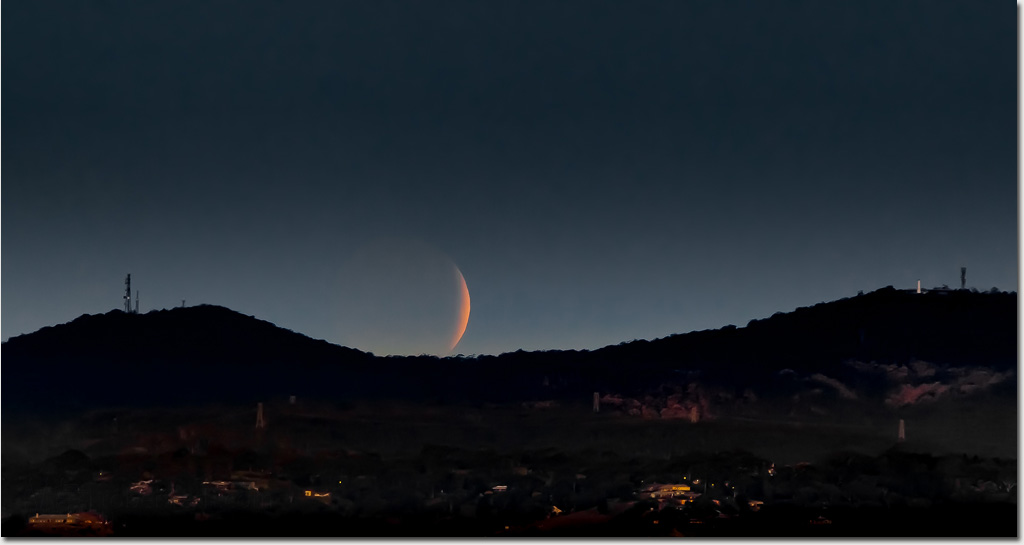
    Day 16’s poem had its starting point in this gorgeous photo of yesterday’s blood moon by Robert Rath. I played with words and transitions based on sound and/or meaning and managed to find my way back to the blood moon.

    Riff on a blood moon

    blood moon
    cut noon
    cup spoon
    dub tune
    lux tone
    flex stone
    vexed bones
    text moan
    lapsed bond
    taps wand
    traps frond
    bats abscond
    the rhythm of a couplet is hypnotic
    the prism of a public is myopic
    the literal and the average are narcotic
    the lunacy of language is hematic

  • Poem a day for 15 April: Notes from Cheltenham Cemetery


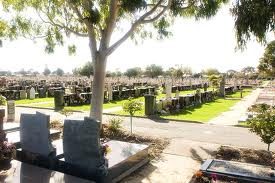
    Cheltenham Cemetery. Image courtesy Adelaide Cemeteries Authority (www.aca.sa.gov.au).

    Day 15 and it’s the half-way mark. Today, some lovely poem-y friends and I went to Cheltenham Cemetery, one of the oldest cemeteries in Adelaide. This poem is an early capture of some of my ideas from the visit.

    Notes from Cheltenham Cemetery

    Here in Cheltenham Cemetery, graves marked
    with pale blond sandstone and polished marble
    shimmer in caustic sun.
    Simple announcements and elaborate shrines,
    artificial bouquets and gold-lettered monuments
    are evidence of thousands mourned
    and then there are the weathered stones:
    stories erased,
    no traces remain.

    James
    beloved husband of Annie Sheeran
    died Feb 24 1895 aged 30 years
    also Annie, daughter of the above,
    died Feb 27 1895 aged 4 years

    It’s peaceful here
    there’s a resigned gravitas
    like that which follows a thunderstorm
    or a terrible loss
    and you try to imagine
    Annie Sheeran in the harsh light
    burying her young husband James
    and a few days later,
    her four-year-old daughter Annie

    and the traffic sounds die away
    and factory sounds fade
    and the birdsong becomes stronger.

    The elements have had their way with this place.
    Along the edges of the path, gum tree roots push the earth to offer up its catch
    while elsewhere, the ground has sunk into coffin-sized hollows,
    sucking headstones and grave markers with it,
    making room for more stratification:
    layers of dead
    on layers of dead
    on layers of dead.

    Barbara Joan Heyward,
    aged 7 years and 8 months, accidentally killed

    The deadly sun and sharp sky
    offer no relief
    to the ordered rows of

    names &nbsp&nbsp&nbspnames &nbsp&nbsp&nbspnames &nbsp&nbsp&nbspnames
    dates &nbsp&nbsp&nbspdates &nbsp&nbsp&nbspdates &nbsp&nbsp&nbspdates
    in loving memory of &nbsp&nbsp&nbspin loving memory of

    and jar with the mayhem of
    lives lived, celebrated, mourned and forgotten here
    and you try to imagine Edward and Joan
    burying Barbara, aged seven, accidentally killed.

    Here, in the shade of a tree, a modest car is parked
    and an elderly woman and her son polish the black stone
    of a grave, place fresh daffodils in the jar
    on the fresh-turned, dry red dust

    and I think of Kilmurray Cemetery
    where my father and mother rest,
    on the other side of the world,
    the earth there is so lush
    compared to the thirsty earth here
    but it makes no difference:
    the end is the same.